Find indoor steam sauna for Hotels, Spas, and Homes
Source 30 indoor steam sauna units from verified Chinese manufacturers. Buyers can compare specifications like heating type, capacity, and dimensions to find the right solution for health facilities and private residences.
Key considerations
Products List


Comprehensive Sourcing Guide
Strategic Sourcing Guide for Indoor Steam Sauna Procurement
Navigating the procurement landscape for indoor steam saunas requires a disciplined approach that balances technical specifications, regulatory compliance, and supply chain reliability. Buyers entering this market must distinguish between traditional steam generation and infrared heating technologies, as the operational mechanics and health implications differ significantly. The following guide synthesizes available product data and industry standards to provide a framework for evaluating potential suppliers and selecting equipment that meets specific facility requirements.
Technical Architecture and Heating Mechanisms
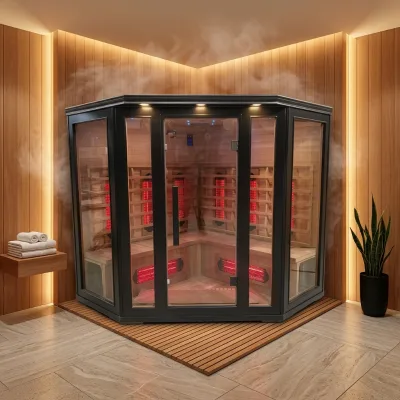
The core of any sauna system lies in its heating technology and material composition. Based on observed market data, indoor units frequently utilize Far Infrared heating elements or electric stoves, such as the Harvia Electric Stove, to generate thermal energy. The distinction between "Dry Steam" and "Far Infrared" is critical; while some units are marketed with dual capabilities, the primary heating mode often dictates the internal environment. Far Infrared saunas typically employ Carbon Crystal Heating Plates or Infrared Ray heaters to warm the body directly rather than the air, allowing for lower ambient temperatures while achieving similar physiological effects.
Material selection is equally vital for durability and thermal efficiency. Solid wood remains the industry standard for interior construction, with Red Cedar and Hemlock being the most frequently observed types in current listings. Red Cedar offers natural resistance to moisture and decay, making it ideal for high-humidity environments, whereas Hemlock provides a cost-effective alternative with similar structural integrity. The heating material itself, often specified as Far Infrared Sauna components, must be integrated seamlessly into the wooden structure to ensure even heat distribution.
Capacity and dimensional constraints are primary decision factors. Observed specifications indicate a range of capacities from 2 to 6 people, with corresponding dimensions varying from compact units measuring 120010501900mm to larger configurations reaching 200020002000mm. Buyers must verify that the selected unit fits the intended physical space while accommodating the desired user load. The door shape, typically a linear type in modern designs, and the inclusion of transom windows are aesthetic and functional features that influence airflow and light penetration.
Compliance, Certification, and Safety Standards
Regulatory compliance is non-negotiable for commercial and high-end residential installations. Buyers must rigorously verify that all electrical components and the sauna structure itself meet international safety standards. The most common certifications observed in the market include CE, ETL, and RoHS. These marks indicate conformity with European safety directives, North American electrical safety standards, and restrictions on hazardous substances, respectively.
When evaluating a supplier, procurement teams should request valid certificates for the specific model being purchased, as certifications can vary between product lines. The voltage rating is another critical safety parameter; most units operate on a 220-240V power supply, requiring a dedicated plug-powered connection. It is essential to confirm that the electrical system matches the local grid infrastructure to prevent fire hazards or equipment failure.
While some background data mentions REACH compliance, this should not be assumed without explicit verification from the manufacturer. Buyers should treat such claims as observations to be validated rather than guaranteed facts. The product standard dimensions, such as 120010501900mm, serve as a baseline for structural integrity but do not replace the need for independent safety testing. Ensuring that the heating elements do not exceed safe temperature limits, typically around 60°C (140°F) for infrared applications, is a key performance metric that must be confirmed through technical datasheets.
Cost Drivers and Pricing Dynamics
The pricing structure for indoor steam saunas is influenced by a complex interplay of factors, including size, material quality, heating technology, and customization levels. Market observations show a wide price range, from approximately $38 to $5,000 USD, reflecting the diversity of product tiers from basic portable units to fully custom-built installations. This variance underscores the importance of defining a clear budget and scope before engaging with suppliers.
Material costs are a primary driver, with solid wood types like Red Cedar commanding a premium over Hemlock due to their durability and aesthetic appeal. The inclusion of advanced features, such as computer control panels or soft touch interfaces, also increases the unit cost. Additionally, the power rating, often observed at 4500W, impacts the overall energy efficiency and initial hardware cost.
Minimum Order Quantities (MOQ) play a significant role in the total cost of ownership. Data indicates that MOQs can range from 1 set to 2 units, allowing for flexibility in procurement. However, buyers should be aware that single-item selling units may carry a higher per-unit cost compared to bulk orders. Customization options, such as tailored dimensions or specific color finishes, introduce additional variables that can affect the final price. Buyers must request detailed quotes that break down material, labor, and customization costs to avoid hidden fees.
Typical Applications and Usage Scenarios
Indoor steam saunas are versatile installations suitable for a variety of applications, ranging from private residential use to commercial hospitality venues. The primary usage category is health and wellness, where the therapeutic benefits of heat therapy are leveraged for relaxation and recovery. In commercial settings, hotels and spas are the most common application areas, requiring units that combine durability with a modern design style.
The design style of the sauna, often modern in contemporary listings, must align with the overall aesthetic of the facility. Features like transom windows and specific door shapes contribute to the visual appeal while maintaining functional integrity. For hotel applications, the capacity of the unit is a critical consideration; larger units accommodating 3 to 6 people are preferred for public areas, while smaller 2-person units may be suitable for private suites or boutique wellness centers.
The heating mode, whether electric or infrared, also influences the application. Electric stoves are traditional and robust, suitable for high-traffic areas, while infrared systems offer a more targeted heating experience that may be preferred in residential settings. Buyers should assess the specific needs of their target demographic to determine the most appropriate configuration.
Supplier Evaluation and Verification
Selecting a reliable supplier is paramount to ensuring product quality and after-sales support. Buyers should prioritize suppliers who provide transparent information regarding their manufacturing processes and quality control measures. The origin of the product, often listed as China or specifically Guangdong, China, is a relevant factor, but it should not be the sole determinant of quality. Instead, focus on the supplier's track record, certification validity, and responsiveness to technical inquiries.
Key evaluation criteria include the availability of online technical support and the provision of free spare parts. These services are critical for maintaining the longevity of the sauna and minimizing downtime. Suppliers should be able to demonstrate their ability to handle warranty claims and provide timely assistance. Additionally, the packaging specifications, such as wooden boxes or specific carton dimensions, indicate the care taken during shipping and can serve as a proxy for overall product handling standards.
When assessing a supplier, request references from previous clients in similar industries. Verify that the supplier can meet the specific customization requirements, such as tailored dimensions or unique color finishes. The ability to provide a detailed product model, such as FL-Sofie or S02, suggests a level of standardization and quality control that is essential for large-scale procurement.
Quality Control and Long-Term Procurement Considerations
Implementing a robust quality control (QC) protocol is essential for mitigating risks associated with long-term procurement. Buyers should establish clear acceptance criteria based on the technical specifications provided, including dimensions, power ratings, and material composition. Regular inspections during the manufacturing process and final pre-shipment checks can help identify defects before the product leaves the factory.
Long-term considerations extend beyond the initial purchase to include maintenance and operational costs. The heating material, such as Carbon Crystal Heating Plates or Infrared Ray heaters, should be evaluated for its expected lifespan and replacement costs. The temperature control mode, whether wall temperature control or computer-based, should be user-friendly and reliable to ensure consistent performance.
Buyers must also consider the environmental impact and energy efficiency of the sauna. Units with higher power ratings, such as 4500W, may incur higher electricity costs over time. Selecting energy-efficient models or those with advanced control systems can help optimize operational expenses. Furthermore, the availability of spare parts and the supplier's commitment to after-sales service are critical for maintaining the sauna's functionality over its lifespan.
Comparative Analysis of Product Specifications
To facilitate informed decision-making, the following table compares key specifications observed across different product models. This comparison highlights the variability in dimensions, capacity, and materials, aiding buyers in selecting the most suitable unit for their specific needs.
| Feature | Model A (FL-Sofie) | Model B (S02) | Model C (S02-88) |
|---|---|---|---|
| Capacity | 2 People | 3 People | 2-3 People (Est.) |
| Dimensions | 120010501900mm | 120010501900mm | 150012002000mm |
| Material | Solid Wood (Red Cedar) | Solid Wood (Hemlock) | Solid Wood (Candian Hemlock) |
| Heating Type | Far Infrared / Electric | Far Infrared | Electric Stove |
| Power | 4500W | Not Specified | Not Specified |
| Control Panel | Computer / Soft Touch | Soft Touch | Not Specified |
| Certification | CE, ETL, RoHS | CE, ETL, RoHS | CE, ETL, RoHS |
| Origin | China | Guangdong, China | China |
This table illustrates that while core features like certification and material type remain consistent, dimensions and capacity vary significantly. Buyers should use this data to align their procurement strategy with their specific spatial and functional requirements. By carefully analyzing these specifications, organizations can ensure they invest in saunas that deliver optimal performance and value.
FAQs
What heating types are available for indoor steam saunas?
Indoor steam saunas typically utilize Far Infrared or Dry Steam heating technologies. Some units combine these with Carbon Crystal Heating Plates or electric stoves like Harvia to ensure efficient thermal distribution within the solid wood structure.
Which solid wood types are commonly used in construction?
The most frequently observed solid wood types are Red Cedar and Hemlock. Red Cedar offers natural moisture resistance, while Hemlock provides a cost-effective alternative with similar structural integrity for the sauna cabin.
Can buyers request customized dimensions and colors for these units?
Yes, customization is available for both size and color specifications. Buyers can request tailored dimensions such as 1200*1050*1900mm or 2000*2000*2000mm to fit specific facility requirements and aesthetic preferences.
What certifications should buyers verify for safety compliance?
Buyers should verify that units hold CE, ETL, and RoHS certifications. These marks indicate conformity with European safety directives, North American electrical standards, and restrictions on hazardous substances for safe operation.
How is the power supply and voltage rating defined?
Most units operate on a 220-240V power supply and are plug-powered. The power rating is often observed at 4500W, requiring a dedicated electrical connection to ensure safe and consistent heating performance.
What capacity options exist for different facility sizes?
Capacity options range from 2 to 6 people depending on the model. Compact units fit 2 people, while larger configurations accommodate 3 to 6 people, suitable for hotels, spas, or private wellness centers.
What after-sale services are typically provided by suppliers?
Suppliers typically offer online technical support and free spare parts. These services ensure long-term functionality and allow for quick resolution of any operational issues or maintenance needs.